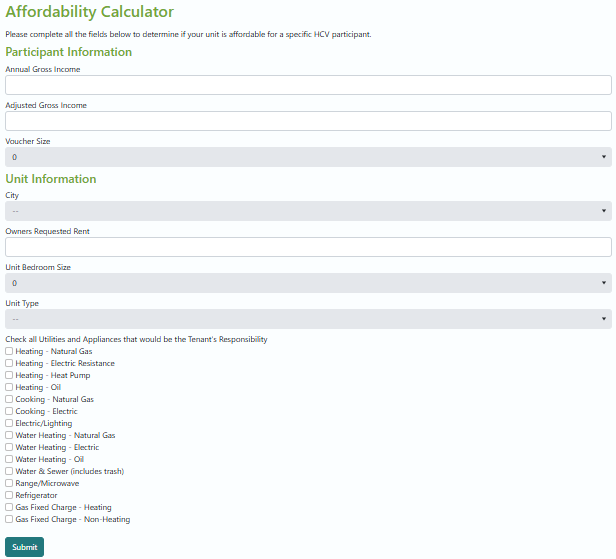
Property owners/managers often ask ... "What factors does CHA take into consideration when calculating the rent offer?”
CHA considers several variables when determining the rent amount (once the Request for Tenancy Approval (RTA) packet is submitted). See below for a breakdown of the different components that play a role in how CHA determines rent.
Asking Rent
When completing the RTA packet, property owners will be asked to submit a desired rent amount for the unit. As a reminder, it’s essential for property owners to study the market before deciding this amount. Why, you ask? Because CHA cannot offer a rent amount that doesn't align with the market. So, when determining the 'Requested Rent' or 'Asking Rent' amount for a rent increase or a new move, you must have a clear understanding of the market before submitting your request.
Market Rent
Following RTA packet submission and after the property owner’s eligibility has been verified, CHA conducts an analysis of comparable market-rate units to determine a reasonable 'Market Rent'. CHA uses AffordableHousing.com to pull comparable data from dozens of reliable, verifiable sources, considering items such as unit age, location, condition, market area, structure type, amenities, and tenant expenses for utilities and appliances. Property owners can also use AffordableHousing.com to find comparable unit data that they want CHA to consider during the rent determination process. Just be aware — if you have comparable unit data that you want CHA to consider during the rent determination process, it must be submitted to AffordableHousing.com prior to RTA packet submission.
Remember, the best comparable units are:
- Within a 1-mile radius of the property (the closer, the better).
- Unsubsidized (i.e., market rate) and leased within the last year.
- The same property type (single-family, duplex, high-rise, etc.).
- The same unit size (number of bedrooms).
- The same utility responsibilities.
HCV Participant Affordability
CHA calculates an HCV participant family’s affordability based on:
- The family’s income, and
- The amount of subsidy the family is eligible to receive.
When calculating the family's income, CHA determines the Total Tenant Payment (TTP), counting all consistent income toward this amount. CHA will adjust the family's income if they qualify for deductions (i.e., childcare costs, students or persons with disabilities, medical expenses).
CHA then uses the prospective tenant’s income data and the amount of subsidy they are eligible to receive (based on current Payment Standards for their voucher size) to calculate the maximum monthly amount the tenant can afford to pay toward both rent and utilities.
Lastly, CHA will compare the Asking Rent, the Market Rent and the participant family’s Affordable Rent. The rent offer will be the lowest of these three amounts.
Remember: It is a rent determination, not rent negotiation. Property owners are encouraged to review the rent offer carefully to ensure the unit information (i.e., bedroom size, utility responsibility) is accurate, and notify CHA of any discrepancy before accepting or declining. |